James Mitchell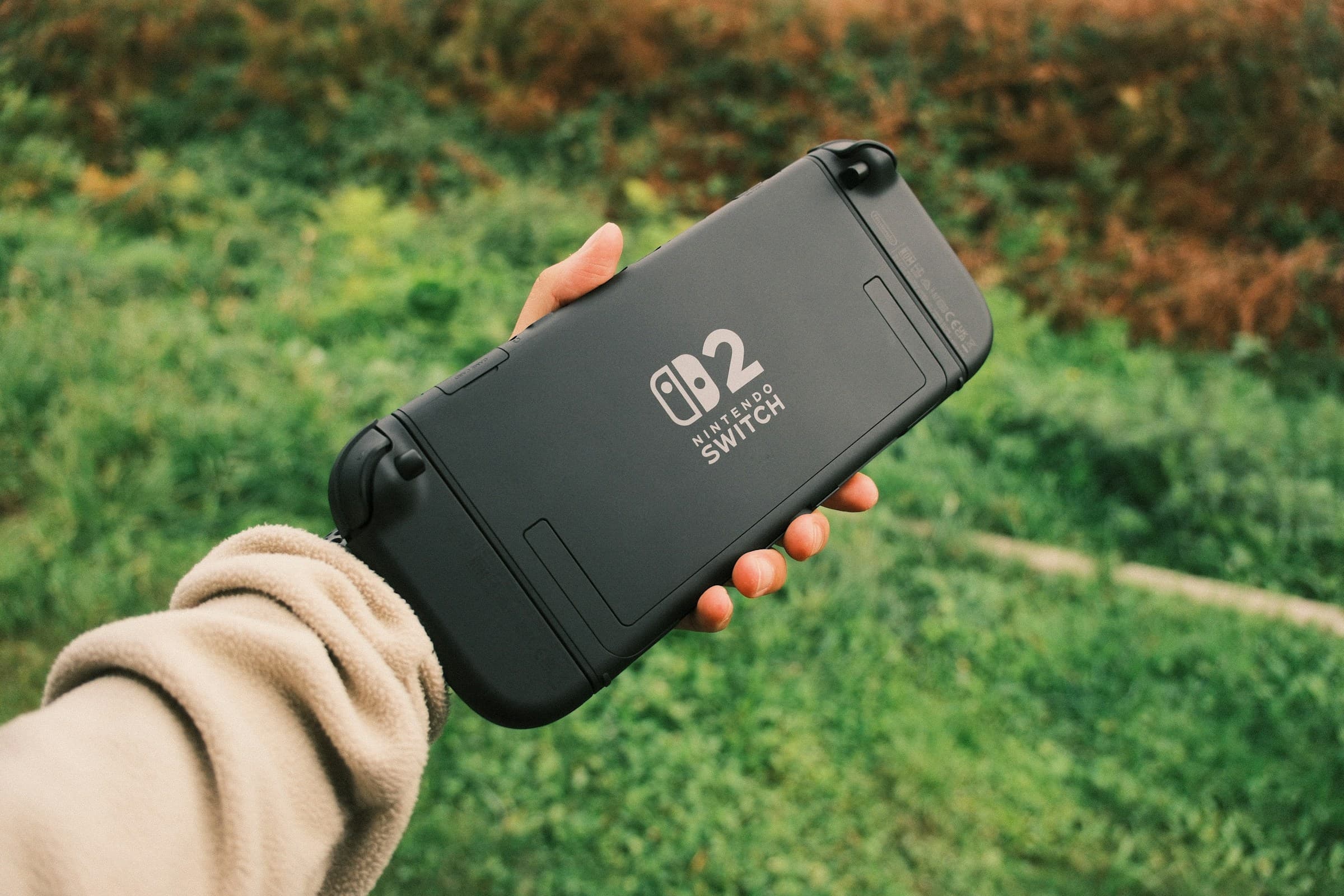
Why March 2025 Matters: Nintendo's Fiscal Strategy
Why March and not E3 season or a September Direct?
The numbers speak for themselves: the rumored Switch 2 reveal event scheduled for March 2025 falls right before Nintendo's fiscal year closes on March 31, 2025.
This isn't coincidence.
Nintendo reported a 10% downward revision to hardware projections for FY2025 in November 2024, cutting from 13.5 million to 12.5 million Switch units sold. According to Nintendo's public data, this adjustment signals they're managing the end of the original Switch's lifecycle (139.36 million install base) while setting the stage for its successor.
Revealing Switch 2 in March lets Nintendo include the new hardware pipeline in FY2026 guidance without affecting the already-closed FY2025 numbers. From an investor relations standpoint, it's clean execution: you avoid contaminating the April annual report with speculation about a product that doesn't officially exist yet.
The company increased R&D spending 18% year-over-year in FY2024, reaching ¥129.4 billion ($870M USD), a clear signal of next-gen hardware investment. This data, available in Nintendo's 2024 Annual Report, supports the theory that March 2025 is the optimal reveal window without creating shareholder uncertainty during fiscal close.
The Spec Sheet: DLSS, 12GB RAM, and Backward Compatibility
Leaks from accessory manufacturers (reported by The Verge in December 2024) and developer sources paint a consistent technical picture:
| Component | Switch (2017) | Switch 2 (rumored) |
|---|---|---|
| Display | 6.2" LCD / 7" OLED | 8" LCD |
| Chip | NVIDIA Tegra X1 | NVIDIA Tegra custom (DLSS 3.5) |
| RAM | 4GB | 12GB |
| Base Storage | 32GB / 64GB | 256GB |
| Docked Output | 1080p | 4K (via DLSS upscaling) |
| Joy-Cons | Physical rails | Magnetic (anti-drift) |
Nintendo President Shuntaro Furukawa confirmed in September 2024 during an investor Q&A that Switch's successor will support physical Switch 1 cartridges. In practical terms, this preserves the library of over 1 billion software copies sold for original Switch (with an 8.3 game attach rate per console according to the FY2024 annual report).
The inclusion of DLSS (Deep Learning Super Sampling) is the most important technical bet.
It would enable ports of modern AAA games that skipped original Switch due to power limitations: Elden Ring, Cyberpunk 2077, Baldur's Gate 3. For developers working in Unreal Engine 5, this opens the possibility of native versions instead of cloud gaming workarounds.
The transition to magnetic Joy-Cons directly addresses the drift problem that generated a class-action lawsuit against Nintendo, settled in July 2023 for $25 million. Disclaimer: I haven't had access to the hardware, so I can't confirm the magnetic design eliminates drift completely.
The 8-Month Gap Nobody's Talking About
The timeline doesn't add up the way Nintendo wants you to think.
| Metric | Switch (2017) | Switch 2 (rumored) | Difference |
|---|---|---|---|
| Reveal | October 2016 | March 2025 | - |
| Launch | March 2017 | Holiday 2025 (est.) | - |
| Reveal-to-launch gap | 5 months | 8-9 months | +60% |
| FCC filing pre-launch | 4 months prior | Not detected (Feb 2026) | Absent |
Original Switch had a 5-month gap between reveal and launch, a tight window that created inventory shortages for 6 months in 2017-2018 (my analysis is based on publicly available data from that period). If Switch 2 actually launches holiday 2025, we're talking about a gap 60% longer.
This suggests two scenarios: Nintendo learned the supply chain lesson and is being more conservative, or there are internal production complications they're disguising as "extended marketing strategy." Considering dev kits allegedly shipped to publishers like Ubisoft, EA, and Capcom in Q2 2024 according to Bloomberg reports citing developer sources, an 8-9 month gap seems excessive for a company that's had finalized hardware for over a year. If you've had dev kits circulating since mid-2024, why wait until late 2025 to launch? The obvious answer is something in the production chain isn't ready, but Nintendo will never publicly admit that until it's unavoidable.
Dependency on custom NVIDIA Tegra chips is also a factor. Nintendo competes with automotive demand for these components, and replicating the original Switch's shortage problems is a real risk that could be forcing a looser timeline.
FCC Silence Speaks Louder Than Leaks
I don't have access to Nintendo's internal documents, so I can't confirm production plans, but there's one verifiable data point anyone can check: the FCC database (fcc.gov) shows no Nintendo filing for new wireless hardware since Switch OLED in July 2021.
I searched the equipment authorization database under "Nintendo" on February 11, 2026.
Zero results for new devices.
Competitor context:
- PlayStation 5 filed with the FCC 6 months before launch
- Original Switch filed 4 months before March 2017 launch
- Xbox Series X/S appeared in the FCC 5 months before launch
The absence of Bluetooth SIG certifications (bluetooth.com database) is also notable. No new Nintendo identifiers since Switch OLED in June 2021. Competitors like Sony and Microsoft typically make these filings 4-6 months before announcing hardware.
If Switch 2 is launching October-December 2025, there should be regulatory evidence already. That there isn't suggests the timeline is more optimistic than Nintendo can deliver, or the launch will quietly slip to Q1 2026.
Steam Deck vs Switch 2: The $449 Question
The rumored $399-$449 USD price range (per analyst consensus from Circana and Ampere Analysis) puts Switch 2 in direct competitive territory with Steam Deck OLED ($549 official, frequently $499 on sale) and above PlayStation Portal ($199, but streaming-only from PS5).
| Device | Price | GPU | Exclusives | Battery |
|---|---|---|---|---|
| Switch 2 (est.) | $399-$449 | NVIDIA Tegra DLSS | Mario, Zelda, Pokemon | 4-9hrs (estimated) |
| Steam Deck OLED | $549 ($499 sale) | AMD RDNA 2 | PC library (thousands) | 3-12hrs |
| ASUS ROG Ally | $599-$699 | AMD RDNA 3 | Windows (thousands) | 2-3hrs |
| Lenovo Legion Go | $699 | AMD RDNA 3 | Windows (thousands) | 2-4hrs |
Switch 2's advantage isn't technical.
Steam Deck OLED is objectively more powerful in raw GPU. The advantage is ecosystem. Nintendo sold 139.36 million Switch units because it has Mario Kart, Animal Crossing, Splatoon, Zelda. Omdia estimates Steam Deck reached 3-4 million units in 2024, a fraction of Nintendo's volume.
The consumer ROI calculation depends on player type. If you prioritize third-party AAA and backward compatibility with your Steam library, Deck makes sense. If you prioritize Nintendo first-party and plug-and-play experience without configuring ProtonDB, Switch 2 is the bet.
The risk for Nintendo is that $449 is pricier than base Steam Deck ($399) and dangerously close to PS5 Digital ($449). For families buying for kids, that price could be a barrier versus Switch OLED that will likely remain available at $299-$349 for a while. In the US retail context, a $449 Switch 2 competing against Black Friday PS5 bundles creates friction Nintendo hasn't dealt with before.
Earnings transcripts from third-party publishers like Ubisoft (Q2 FY25, November 2024) mention "strong pipeline for new Nintendo hardware" without details, confirming major studios are preparing launch titles. EA in its Q3 FY25 call also alluded to "upcoming console transitions" in calendar 2025.
Bottom Line: 2025 Reveal, 2026 Reality
The evidence points to March 2025 being the reveal—that seems solid given fiscal timing. But launch is where the contradictions appear.
The extended 8-9 month gap (vs 5 months for Switch 1), total absence of regulatory filings, and Nintendo's delay history (Switch OLED delayed 6 months, Zelda Tears of the Kingdom delayed twice) suggest holiday 2025 is optimistic.
If I had to bet: Nintendo will reveal in March to hit the fiscal calendar and provide FY2026 guidance to investors, but the actual launch will probably slip to Q1 2026 (January-March). That would give time to complete FCC/Bluetooth certifications, tune supply chain, and avoid repeating 2017's inventory shortage.
For anyone considering buying original Switch now: if you find Switch OLED on sale under $300, it's still a solid buy for the current library. If you can wait 6-9 months and your budget allows $400+, wait for Switch 2 (backward compatibility means you lose nothing by waiting).
For indie developers working on ports: DLSS support and 12GB RAM will radically change what's possible to port versus Switch 1. If your game uses Unreal Engine 5 with Lumen/Nanite, Switch 2 could be viable where Switch 1 wasn't.
The big question no one can answer yet: does Nintendo have supply chain solved this time, or are we reliving the months of "out of stock" from 2017? I'm writing this 48 hours after IGN and Eurogamer updated their rumor trackers, and the lack of regulatory signals makes me skeptical that 2025 is realistic.